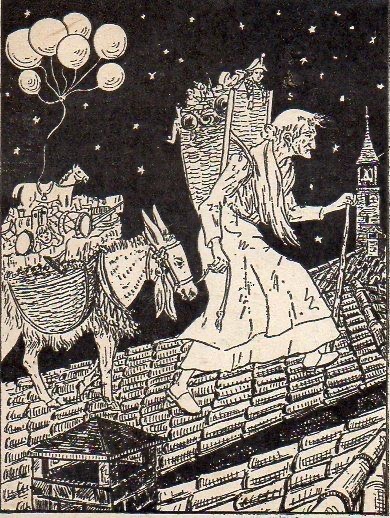


It’s the start of a new year… and the perfect time to enjoy a new installment in The Folklore Files!
In the enchanting tapestry of Italian folklore, amidst tales of saints and spirits, one figure stands out, capturing the imaginations of young and old alike with her blend of whimsy and wisdom: La Befana, the benevolent witch of Italian tradition.
La Befana’s origins are shrouded, with her story intertwining with both Christian and pagan customs. The most popular legend recounts her encounter with the Three Wise Men on their journey to Bethlehem to visit the newborn Jesus. According to this tale, the Magi stopped at the humble abode of La Befana, seeking directions to the manger. Though she provided hospitality, she declined their invitation to join them, citing her duties to tend to her household chores. Regretful of her decision, La Befana later had a change of heart and set out to find the Christ child, armed with gifts for the infant. However, she never found the exact location of the manger, wandering the earth to this day, leaving gifts for children in hopes that one of them might be the divine child she seeks. This narrative embodies the spirit of generosity and the eternal quest for goodness, making La Befana a cherished figure in Italian folklore. Her annual visit on the eve of the Epiphany, celebrated on January 6th, marks the culmination of the Christmas season in Italy, with children eagerly awaiting her arrival.
Yet, La Befana’s story is not confined to religious allegory alone; it also bears traces of ancient pagan customs, particularly those associated with the winter solstice. In pre-Christian times, the winter solstice held great significance as a time of rebirth and renewal, with rituals and festivities dedicated to welcoming the return of light and the lengthening of days. Elements of these pagan traditions merged with Christian beliefs over time, giving rise to the multifaceted character of La Befana. Her broom, often depicted as a means of transportation, harkens back to ancient rites of purification, symbolizing the sweeping away of the old year’s troubles to make way for the new. Similarly, her association with gifts echoes the spirit of abundance and goodwill that characterized winter solstice celebrations.
The imagery surrounding La Befana varies across different regions of Italy, reflecting the diversity of local folklore and customs. In some areas, she is depicted as a kindly old woman, dressed in tattered garments, while in others, she is portrayed as a more mysterious figure, cloaked in darkness and wielding magical powers. Regardless of her outward appearance, however, La Befana’s essence remains constant: a symbol of hope and kindness, traversing the realms of myth and reality to bestow her blessings upon those she encounters. Her name itself, derived from the Italian word “epifania,” meaning epiphany, underscores her role as a harbinger of divine revelation and spiritual awakening.
In addition to her significance within Italian culture, La Befana has also captured the imagination of audiences beyond Italy’s borders, inspiring adaptations and reinterpretations in literature, art, and popular culture. From children’s books to theatrical productions, her story continues to captivate audiences of all ages.
La Befana’s enduring popularity has led to her incorporation into various holiday traditions around the world, with celebrations and events dedicated to her memory. In recent years, efforts have been made to promote her as a cultural ambassador for Italy, further cementing her status as an iconic figure of folklore.
Are you familiar with stories of La Befana? Do you have a favorite holiday season myth or story? Share yours in the comments!

Did you enjoy this feature? Check out other entries in the Folklore Files…


Something went wrong. Please refresh the page and/or try again.
