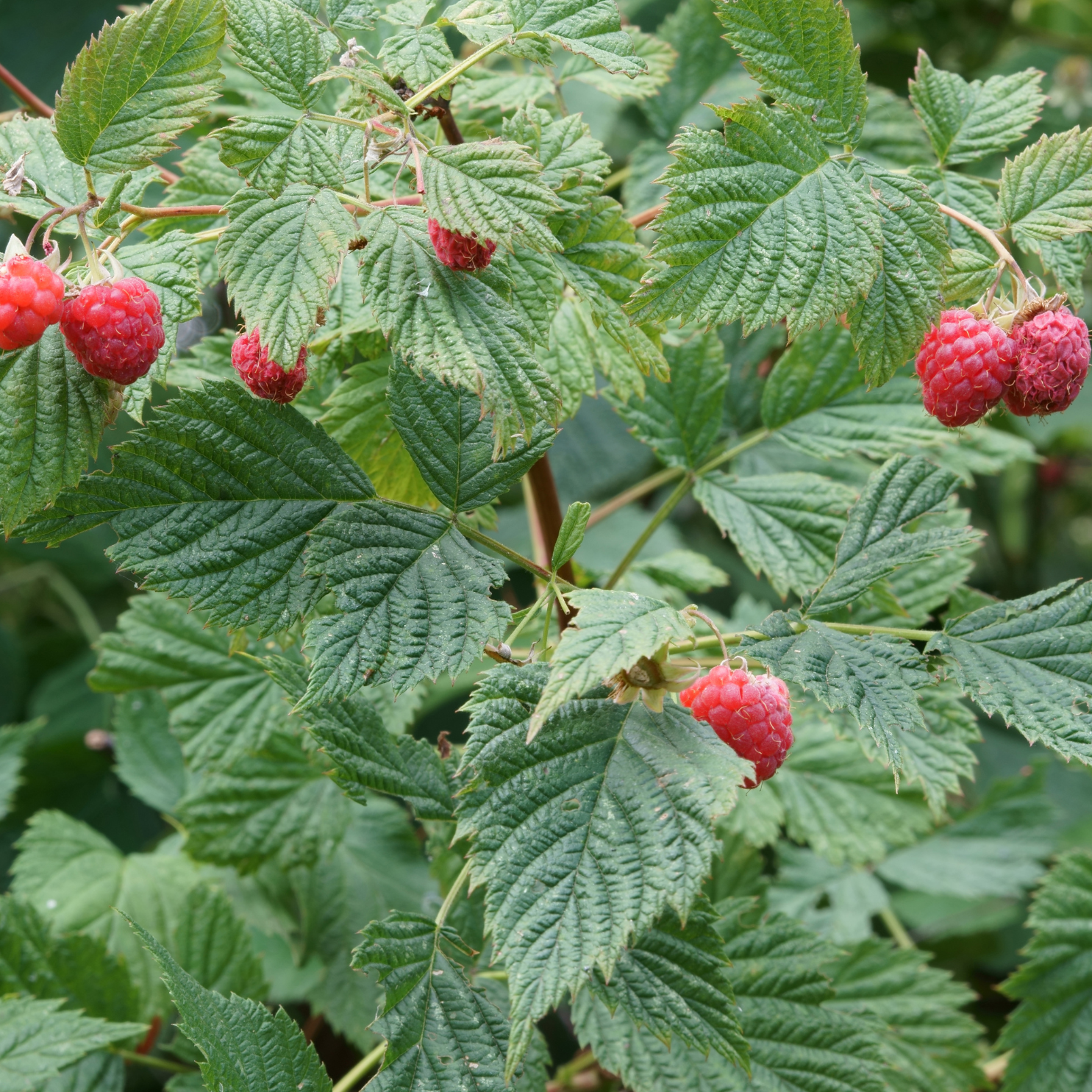


Though I typically focus my Botanicals 101 posts on herbs found in my own products, today’s feature is too good not to share! Raspberry leaf, derived from the red raspberry plant (Rubus idaeus), has a long-standing reputation as a potent herbal remedy, especially for women’s health. While raspberry fruit is widely enjoyed for its sweet and tart flavor, it’s the leaves that hold extraordinary medicinal value. Raspberry leaf tea is often celebrated as a “woman’s herb” due to its ability to support reproductive health, ease menstrual discomfort, and tone the uterus. But beyond its benefits for women, raspberry leaf is a general wellness tonic that offers a wealth of nutrients and healing properties for the entire body.
Raspberry leaf refers to the dried leaves of the red raspberry plant, a perennial shrub native to Europe and parts of Asia. Raspberry leaves are packed with vitamins and minerals, including vitamin C, vitamin A, vitamin E, and B vitamins, as well as iron, magnesium, potassium, and calcium. Its high tannin content also gives it astringent properties, which can help tighten and tone tissues, particularly the uterus.
Raspberry leaf has been used for centuries in traditional medicine, particularly in Europe and among Native American tribes. Historically, raspberry leaf was primarily valued for its benefits during pregnancy and childbirth, and midwives and herbalists would prescribe raspberry leaf tea to pregnant women to help strengthen the uterus, prevent miscarriage, and prepare the body for labor.
In medieval Europe, raspberry leaf was also used to treat wounds and infections due to its astringent and anti-inflammatory properties. Additionally, it was a common remedy for digestive disorders, such as diarrhea, and was believed to help cleanse the blood and support the liver.
Raspberry leaf can be easily incorporated into your wellness routine in a variety of ways, with raspberry leaf tea being the most popular method of consumption. For those looking to support menstrual health or ease PMS symptoms, drinking 1–2 cups of raspberry leaf tea daily throughout the menstrual cycle can help tone the uterus and reduce discomfort.
Pregnant women often begin drinking raspberry leaf tea in the third trimester, starting with one cup per day and gradually increasing to 2–3 cups per day as labor approaches. Always consult with a healthcare provider before using raspberry leaf during pregnancy.
To make raspberry leaf tea:
– Add 1–2 teaspoons of dried raspberry leaf to a cup of boiling water.
– Steep for 10–15 minutes.
– Strain and enjoy with honey or lemon if desired.
Level up: Add a slice of fresh ginger root to help with PMS-related nausea!
Raspberry leaf stands out as one of nature’s most versatile and nourishing herbs, particularly for women’s health. Its ability to tone the uterus, ease menstrual cramps, support pregnancy, and provide essential nutrients makes it a valuable herbal ally. But raspberry leaf’s benefits extend beyond reproductive health—it offers general wellness support, digestive health benefits, and anti-inflammatory properties that make it a holistic remedy for all.
Whether you’re seeking relief from menstrual discomfort, support during pregnancy, or simply looking to boost your overall health, raspberry leaf provides a gentle yet powerful solution. By incorporating raspberry leaf tea or infusions into your routine, you can enjoy the many benefits of this ancient herb, connecting with nature’s wisdom for health and healing.
READ MORE…
- Cunningham, Scott. Cunningham’s Encyclopedia of Magical Herbs. Llewellyn, 2020. [SHOP NOW]
- Cunningham, Scott. Magical Herbalism. Llewellyn, 2021. [SHOP NOW]
- Lust, John. The Herb Book. Bantam, 1974.
- Oakley Harrington, Christina. The Treadwell’s Book of Plant Magic. Weiser Books, 2023. [SHOP NOW]
- Shababy, Doreen. The Wild & Weedy Apothecary. Llewellyn, 2010. [SHOP NOW]
These statements have not been evaluated by the Food and Drug Administration. This information is not intended to diagnose, treat, cure, or prevent any disease.
